Somatic Tapping During Stretching: Science, Benefits, and How-To Guide
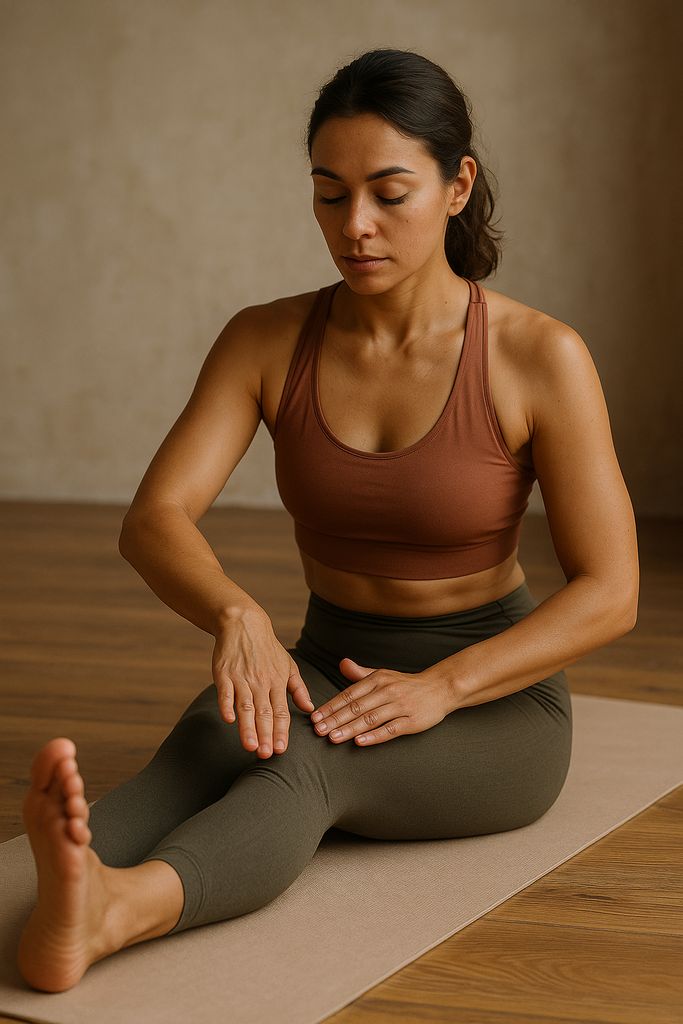
Fascia and Stretching
Fascia is the connective tissue web that envelopes muscles, nerves, and organs. It is highly sensitive
and responsive to different stimuli, including mechanical load, hydration, and neurological input.
Stretching applies a sustained load, signaling fascia and surrounding tissues to adapt. Tapping adds
another layer of input—sensory stimulation—that can change how your nervous system interprets the
stretch.
The Role of Tapping or Slapping
When you tap or lightly slap the area being stretched, several processes may occur: - Neurological
Down-Regulation: Mechanoreceptors in the skin override or soften tension signals from muscle
spindles, reducing protective contraction. - Increased Circulation: Percussion promotes local blood flow,
enhancing tissue hydration and pliability. - Improved Somatic Awareness: Tapping brings attention to
the area, increasing proprioception and mind-body connection. - Fascia Glide: While fascia isn’t
“released” mechanically, reduced muscle guarding allows better glide between layers. ---
Evidence from Research
Direct studies on tapping during stretching are limited, but related modalities like percussive massage,
vibration, and self-myofascial release provide supportive evidence:
Percussive therapy (massage guns): Research shows short-term increases in flexibility and reduced muscle stiffness after sessions
as short as 5 minutes (Konrad et al., 2020; Skinner et al., 2023). -
Vibration and vibration foam rolling: Systematic reviews highlight small to moderate improvements in range of motion (Park et al., 2021).
Self-myofascial release (foam rolling): Multiple reviews conclude consistent short-term ROM and soreness relief (Cheatham et al., 2015; Wiewelhove et al., 2019).
Qigong and somatic practices:
Patting or tapping has been linked to improved circulation and parasympathetic activation (Zeng et al.,2024).
How to Practice: A Step-by-Step Protocol
1. Warm Up: Spend 2–4 minutes moving the target area gently to increase circulation and prepare tissues.
2. Enter a Mild Stretch: Move into a stretch that feels like a 3–4/10 intensity—enough to feel tension but not pain.
3. Apply Tapping: Use fingertips or a cupped hand to tap the muscle belly for
20–40 seconds at 2–4 beats per second. For tools like massage guns, keep the setting low and hover slowly across the tissue.
4. Breathe and Scan: Combine tapping with slow exhalations (4–6 seconds) to encourage relaxation and vagal tone.
5. Re-Test the Range: Exit and re-enter the stretch, noticing any increase in comfort or range of motion.
6. Integrate with Movement: Lock in gains by following with controlled movements (e.g., hip hinges after hamstring stretches).
Practical Applications
Warm-ups: Enhance flexibility before yoga, Pilates, or athletic training. -
Recovery: Reduce post-exercise stiffness and soreness.
Somatic release: Pair with meditation, breathwork, or mindful
stretching for emotional release and stress relief.
Sauna practice: In heated environments, tapping may feel more effective, but should be used at reduced intensity due to heat’s amplifying effects on circulation and pliability.
Safety Guidelines
Keep intensity gentle to moderate; avoid aggressive slapping. - Do not tap over joints, bones, or
injured tissue. - People with connective tissue disorders, neuropathy, or clotting conditions should
consult a physician first. - Expect short-term benefits—minutes to hours—rather than permanent
changes. Regular practice plus strength and mobility work creates lasting results.
Comparisons with Other Modalities
Tapping: Accessible, low-tech, excellent for awareness and gentle nervous system modulation. -Foam Rolling: Widely studied, good for soreness and mobility but sometimes uncomfortable.
Percussive Devices: Produce measurable short-term changes in stiffness and range, though higher intensity requires caution. - Vibration: Enhances ROM when combined with exercise; protocols still under study.
Conclusion
Somatic tapping during stretching is a simple, science-informed way to enhance flexibility,
Down-regulate tension, and deepen body awareness. By combining breath, mindful awareness, and
rhythmic sensory input, practitioners can achieve short-term improvements in range of motion,
circulation, and comfort. Whether practiced at home, in a yoga class, or in a sauna setting, it offers a
powerful bridge between ancient somatic traditions and modern fascia science.
References
- Melzack & Wall. Pain mechanisms: a new theory. Science (1965).
- Cheatham et al. Self-myofascial release: A literature review. IJSPT (2015).
- Wiewelhove et al. Foam rolling meta-analysis. Front Physiol (2019).
- Park et al. Vibration foam rolling meta-analysis. J Exerc Rehabil (2021).
- Konrad et al. Percussive massage acute effects. J Clin Med (2020).
- Skinner et al. Percussive therapy and hamstring ROM. Sensors (2023).
- Sams et al. Percussive therapy review. J Bodyw Mov Ther (2023).
- Zeng et al. Qigong and cardiovascular markers. Int J Environ Res Public Health (2024).
- Stapleton et al. EFT for PTSD. Front Psychol (2023)
You may also like
Finger Snapping and the Brain